
In this post, we share some insights on the capacities required to navigate the complexity of systems change, and reflect on the challenges and sensitive areas we’ve encountered and experienced on our own systems change journeys, covering both inner and outer dimensions.

Photo by Colin Lloyd on Unsplash
Working on and contributing to systems change and societal transformation is courageous and rewarding work. It’s the kind of work that brings forth our best intentions, while also deeply touching the core of who we are and how we want to embody what we are dedicated to. It is often entangled with inner as well as outer moments of clarity and vision; challenges and uncertainties, and it requires us to tend to multiple relationships, layers, aspects and perspectives, while holding a steady course for the long haul.
At Collective Transitions, we see our work as a kind of expedition that leads us through various forms of predictable and unpredictable circumstances, untouched landscapes, and uncharted territories. It is not work to be done alone, but rather a collective endeavor that cannot be linearly planned, managed, or forecasted. Every expedition looks different, as do the terrain conditions that teams, organisations, and collaborative networks find themselves in, and move through.
In our work, the courses of action need to be continuously and sensitively re(de)fined and adapted to the unfoldings of the local context with its diverse stake- and rightholders, its interrelationality with the wider systems, and their interactions and dynamics. The approach requires the flexibility to embrace unforeseen events, whilst providing steady and continuous attention. This work calls for a heightened ability to track patterns, provide care and presence to what is in the here-and-now, whilst also holding a shared long-term intention towards the well-being of all parts of the system, more-than-humans, organisations, and people.
When working on systems change that scales deep and wide, we still see a tendency towards talking about what needs to change (on the outer level), or what needs to be different and how bright the future would be “if only they/we did XYZ.” What’s not always mentioned or explored are the aspects of the inner level: how we ourselves rewire, upgrade, and lean into embodying this journey of transformative change, in order to act on it as collectives.
It seems that not enough attention is given to what it actually takes — as individuals and as teams — to work for, and also go through, our own transformative decluttering and upgrading process, leading to this holistic systems change.
Navigating complexity, overcoming challenges
When working (often passionately) on systems change and topics of societal relevance — such as discrimination, climate change, regenerative agriculture, etc. — we naturally enter into the realm of complexity. It’s not much different from setting foot in an uncharted territory, with its own wildlife, weather patterns, and interdependent dynamics which are often unpredictable.
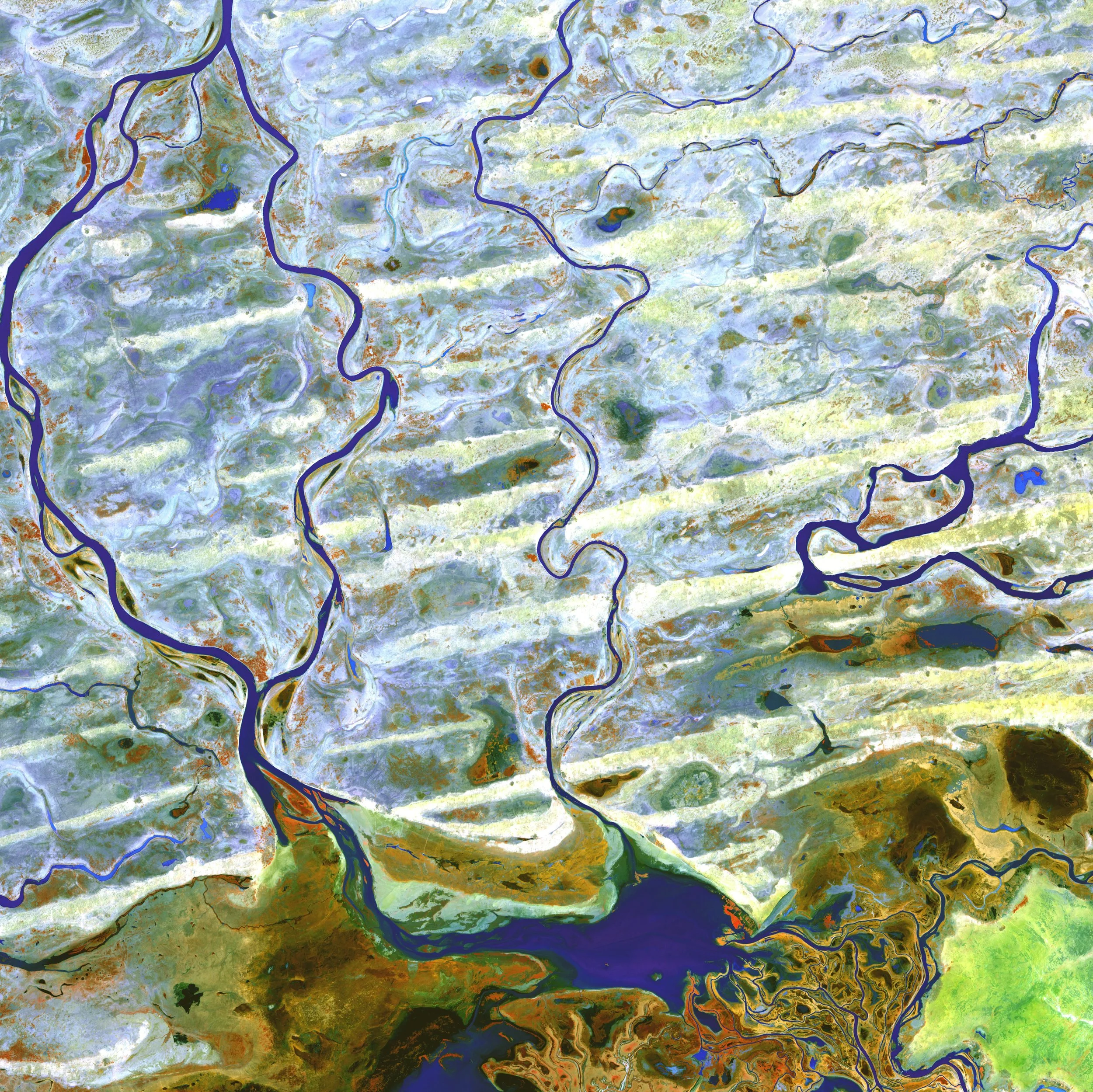
Complexity is like this wild, untouched landscape: wide, steep, curvy, and seemingly endless. It’s a field where no straight line runs through it. It’s a territory that shifts and changes rapidly and is informed by unforeseen and interrelated circumstances and events.
When on this journey, we enter a path of unlearning and relearning. This alone may be a challenge for many of us. And, more often than not, steep curves along the path will take us further by surprise. This is the beauty of this work: that it surely will transform us along the way. At the same time, the layered intricacy of the process can sometimes be seen as a roadblock or hurdle, as it seems to complicate or slow things down. This, too, can be part of the adventure!
Often, undertakings in the realm of societal and systems change have unknown outcomes. In our work, we’ve experienced many moments when a sense of fulfilment prevailed, with a feeling that we are on the right track. Yet there were other moments when a sense of failure was lurking around the corner and everything felt on the brink of collapse. And there were also the moments, where suddenly the dynamics at the root level could shift, allowing, opening, for a whole new horizon to be seen.
Challenges — in the form of pitfalls, errors, and obstacles — are common in this field of work, due to the high complexity and at times fragility of the situation, as this can be delicate work with deeply ingrained wounds and fractured dynamics. These challenges could arise for a number of reasons including something we ‘did wrong’ or neglected to consider. But if we dared to listen, slow down, and embrace what is, we’d see that these challenges are our greatest teachers and offer us unique opportunities for growing beyond who we thought we are, and what we thought this work is also about. Without them, our own transformative processes, as well as that of the actual work in question, would lack fuel, clarity, and realness.
Preconditions for change: A list of questions
At Collective Transitions, we’re striving to better understand the challenges inherent in this work, and to preclude possible errors and hindrances. As such, we came up with a list of questions highlighting important aspects and preconditions that — if not intentionally worked with — may obstruct or weaken the possibility of transformative change at the root layers of this work.
This non-exhaustive list is informed by our own journeys — by what we have observed in ourselves and in the people we’ve worked with. We introduce these points in the form of questions, as a way to offer time to reflect and to self-assess — both as individuals and as teams — how explicit, clear, and intentional we are in each of these various aspects.
To aid the reader, we distinguish between the ‘outer’ and ‘inner’ dimensions of this work. Yet we recognise that these are interrelated, interdependent, and always carry an aspect of the “other” in them. As this is work done together with others, we invite the reader to regularly replace the ‘I’ with ‘we’.
***
Outer dimensions:
Am I (are we) part of the system I want to help shift and transform, and have I been invited to be of support for this?
Am I aware of where the system is at and respecting boundaries/resistance?
Who is with me on this journey, and are we complementary and diverse in skillsets, competencies, and character?
Have I listened deeply and invited all voices that are influenced by or part of the particular system to be represented?
Have I ensured including and connecting with the marginalised voices and aspects?
How am I balancing my focus on the process and the quality of relationships while tending to concrete actions and outer results?
Do I feel like I know the answer and want to impose it, or am I authentically holding and inviting inquiry with curiosity, compassion, commitment, and courage?
Have I researched the facts, trends, and realities of this topic/place?
Do I see and consciously work with the mirroring of inner and outer patterns?
Am I listening to the deeper, and more hidden, information of specific situations, events, and experiences, especially when it gets messy and uncomfortable?
***
Inner dimensions
How conscious am I (are we) of how I (we) perceive the world? And how does this impact what I (we) do?
How do I want to show up and care for myself, others, and the whole during this expedition?
Which mindsets and beliefs am I coming from? What is my interior condition?
Have I taken the required time to establish the preconditions to be with what is, such as crafting an explicit and shared intention, transparent group agreements, and understanding the collective capacities?
Am I continuously strengthening my own container to be with and host what is and what might come?
Where do I see the old paradigms I want to help shift show up in me?
Am I aware of my range of privileges and how I act upon them?
Am I aware of the level of capacity and practice needed for addressing the multiple layers of this system, and do I dare to reach out for support?
Do I have trusted practitioners, coaches, and supporters who can mirror me and be at my back?
How do I tend to my personal practice and self-care, and how do I support others in that?
How am I using my voice and ways of communicating with others? Am I aware of the words used and their impact?
Have I established a shared culture of how I want to be with others, and how do I maintain and further evolve it?
How deep have I been able to go with the complex scope of the topic I am focusing on, and have I connected to the pain and disturbing elements that are part of it?
How am I embracing failure, vulnerability, difficulties, and tensions?
Am I staying curious and inviting inquiries and explorations?
How do I want to treat sensitive areas and dynamics that I may be confronted with and that I cannot foresee in my planning?
What other ways of knowing do I need to activate and strengthen in order to be even more inclusive, e.g., tuning in to more subtle sources of knowledge?
Do I operate from a holistic point of view?
Do I invite followers or co-creators?
What mode am I acting from (e.g., fight, fear, co-creative mode)?
Moving forward
Pitfalls, stumbling blocks, and hurdles are all challenges that form part of this work. They help us stay connected and alert, not only to reality but also to the muddy parts and aspects that remain in the shade. What’s more, they point to qualities and aspects that require reflection and nourishment in order to successfully go deeper and further in this work.
At Collective Transitions, through our various personal and professional experiences and by witnessing friends and colleagues active in different fields and sectors, we observed several ‘small gems’ that surface along the way and become part of these expeditions:
a growing awareness of our state of presence and a sense of the importance of surrendering and letting go of what we thought we would do or become, or what should happen.
a growing sense of compassion as well as curiosity for people and dynamics that may be different from what we are used to, or comfortable with.
a growing sense of the importance of calling upon our potential to co-create and deepen our individual and collective courage to be with what is, while listening through the noise to what is important to respond to and act upon.
We could call these gems ‘capacities’ — both individual and collective — that become awakened and cultivated when we lean into the force field of societal transformation and systems change, when we dare to go beyond our rational and cognitive reasoning. Given that this work is highly complex, interdependent, and relational, this seems to be the only way.
Another critical step is of course to reinforce a culture of learning from and with each other, so we can evolve together from endeavour to endeavour and across perceived borders and fields of work.
Author
Written by Luea Ritter with the support of Caroline Cunliffe, Lisa Mastny and Nancy Zamierowski.