

How We Work
Our approach is rooted in earth-based wisdom traditions and a deep attunement to the wisdom of living systems and the dynamics of change.
We view obstacles as teachers, engage with the generative power of the liminal spaces, and welcome inquiry from multiple perspectives.
By weaving together awareness-based practices, personal reflection, and collective leadership, we cultivate a field of sensitivity that makes hidden potential visible. From this foundation, relevant, precise and transformative interventions can take place.
Orientations & Dispositions
Our work is guided by a set of core orientations and dispositions: principles that shape how we approach systems, relate to the land, people and more-than-human elements involved, and respond to what emerges. They help us stay attentive to what a system needs, how we participate in it, and what the situation calls for.
These orientations have three dimensions: what we orient towards, what grounds us, and how we navigate the work. The first gives us our horizon; the second, our ground. The third asks us to hold two complementary dispositions in balance: receptiveness and care, alongside commitment and responsibility.
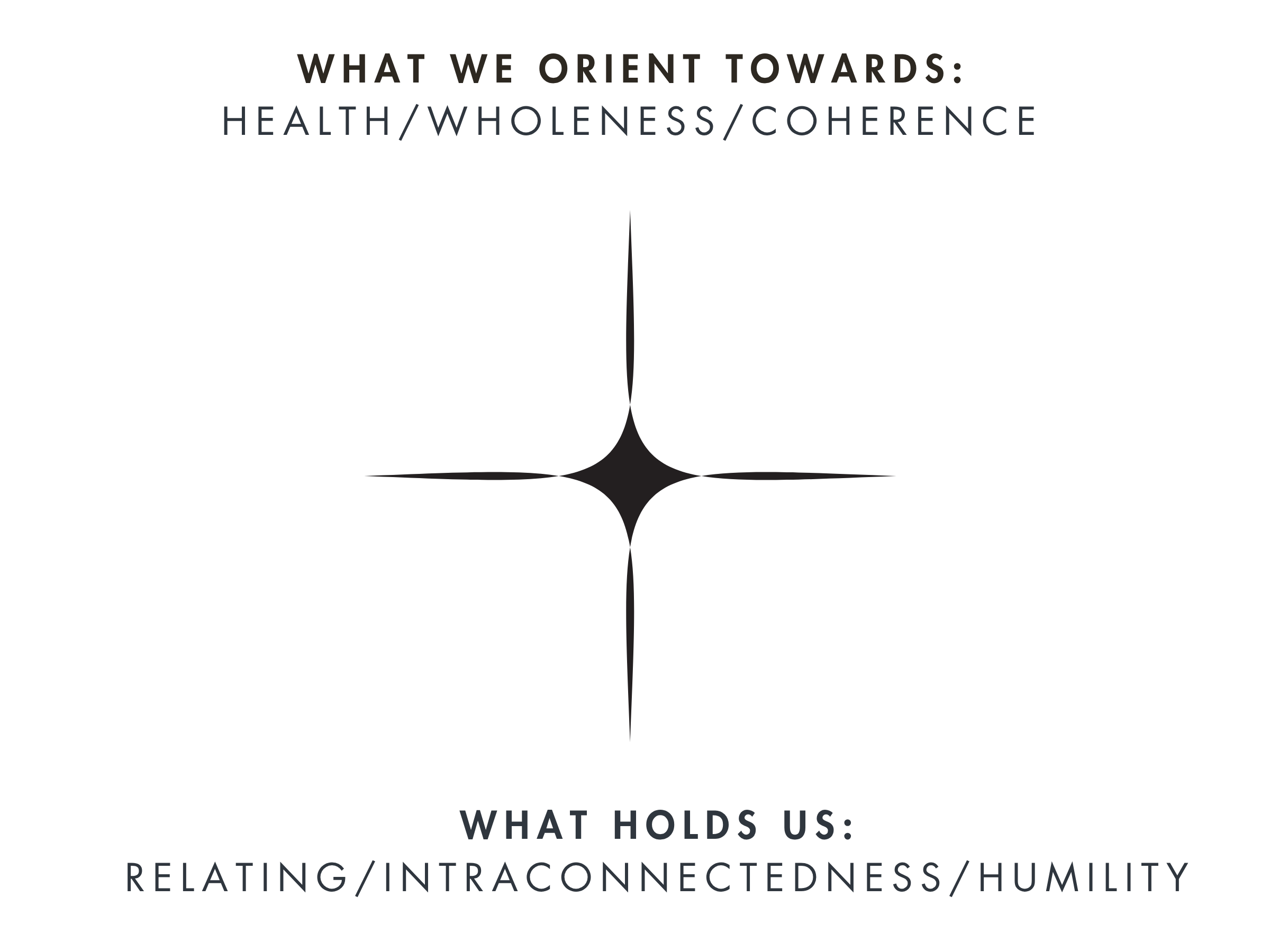
What we orient towards:
Health, wholeness and coherence
We start from the understanding that a system is already whole and holds its own knowledge, resources and potential for health. Our role as process stewards is not to impose solutions from the outside, but to support the conditions in which a system can access its own resources, strengthen its inner clarity and move towards greater coherence.
For this:
We understand ourselves as a system, as individuals and collectives. We cultivate inner alignment and coherence, as a way to act on the whole.
We understand that the system holds its own resources. We’re not here to resource a system from the outside: this already marks a pattern of dependency, or power over, as if the system didn’t have its own resources and it was ours to provide it.
The ground — what holds us:
Relating and interconnectedness
We work from an understanding of interconnectedness: that people, places and living systems are interdependent, and that everything affects everything else. No situation exists in isolation. What happens within a system is shaped by its relationships, histories and wider context, including the relationships between humans and the more-than-human world.
For this:
We tap and work with our wider ways of knowing, to track the multiple layers of the system, beyond language, measurement or ‘data’.
We take time to get to know each other and the system. We understand that relationships have been built over time and need time to evolve.
We listen for the intrinsic knowledge and wisdom within a system. Before judging that something is ‘bad’, we listen for what the system aims to tell and offer as a gift.
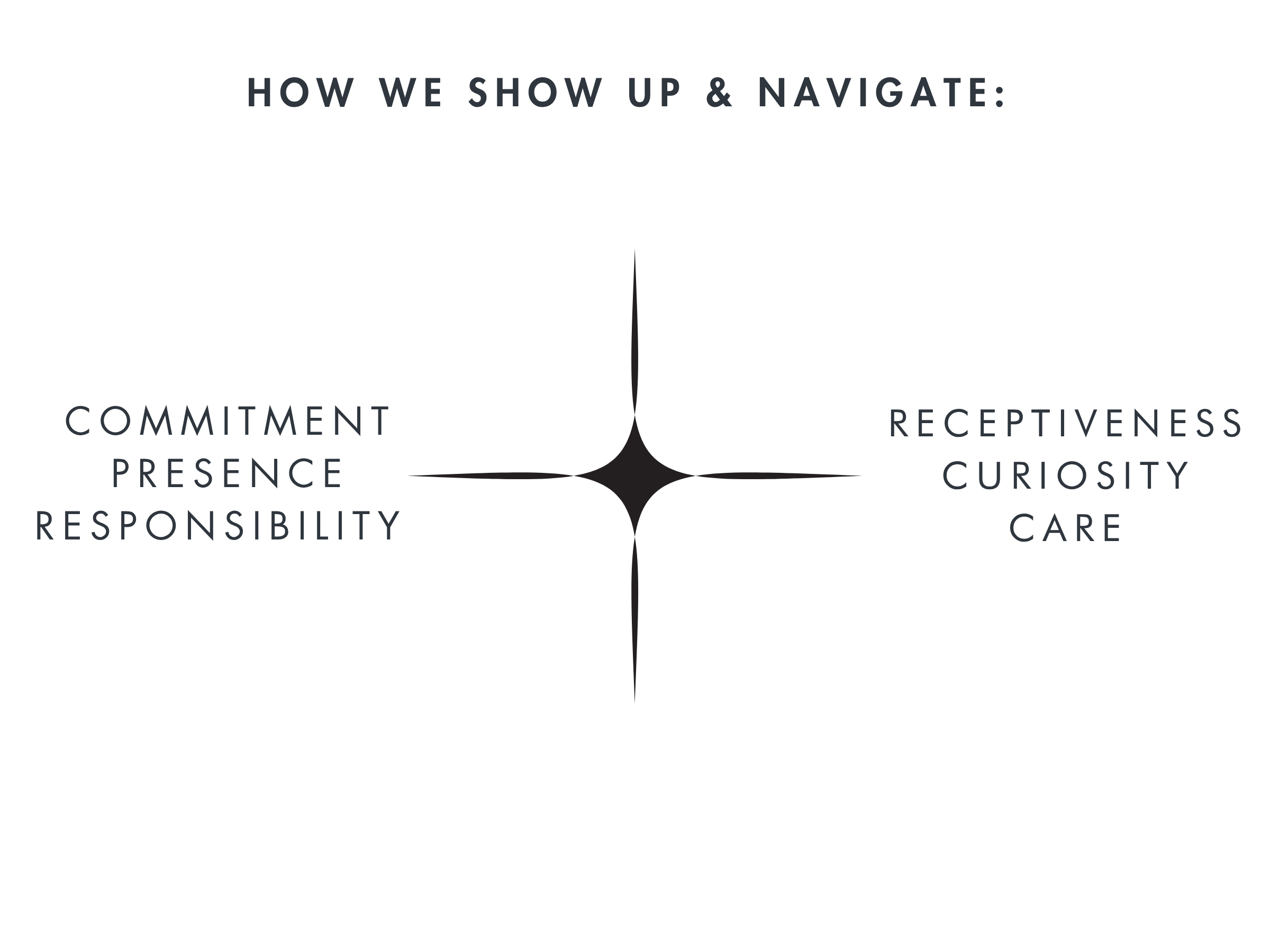
How we show up and navigate the work:
Accompanying living systems calls for both openness to what is emerging and a willingness to take responsibility for our participation. We need to remain receptive to what we cannot yet see or understand, while staying present and committed to the work over time. Neither disposition is sufficient on its own; the craft lies in sensing what is needed, and when.
Receptiveness, curiosity and care
We work with what is, staying with the uncertain and emergent, even if uncomfortable. We acknowledge what is difficult and painful. We accept vulnerability and rawness. We listen for what is alive.
We listen for what wants to happen, not what we are conditioned to see or wish for. We listen both to what is expressed and to implicit needs, dynamics and perspectives.
We cultivate empathy. We are ready to shift perspectives and look through different lenses. We include subtleties and diverse voices, and enhance wider ways of knowing.
Commitment, presence and responsibility
We become part of what we engage with, and therefore commit for the long-arc to the systems we support. We don’t run away halfway.
We look after precondition to foster in us as instruments to be able to be there for the work. We take care of ourselves so we can show up.
We are ready to lean in when needed, but also ready to hold back when not, and we listen to the system to know when to do which.
Our work also takes place across different ecosystems of practice and spans the six spheres of societal and deep systems realignment.
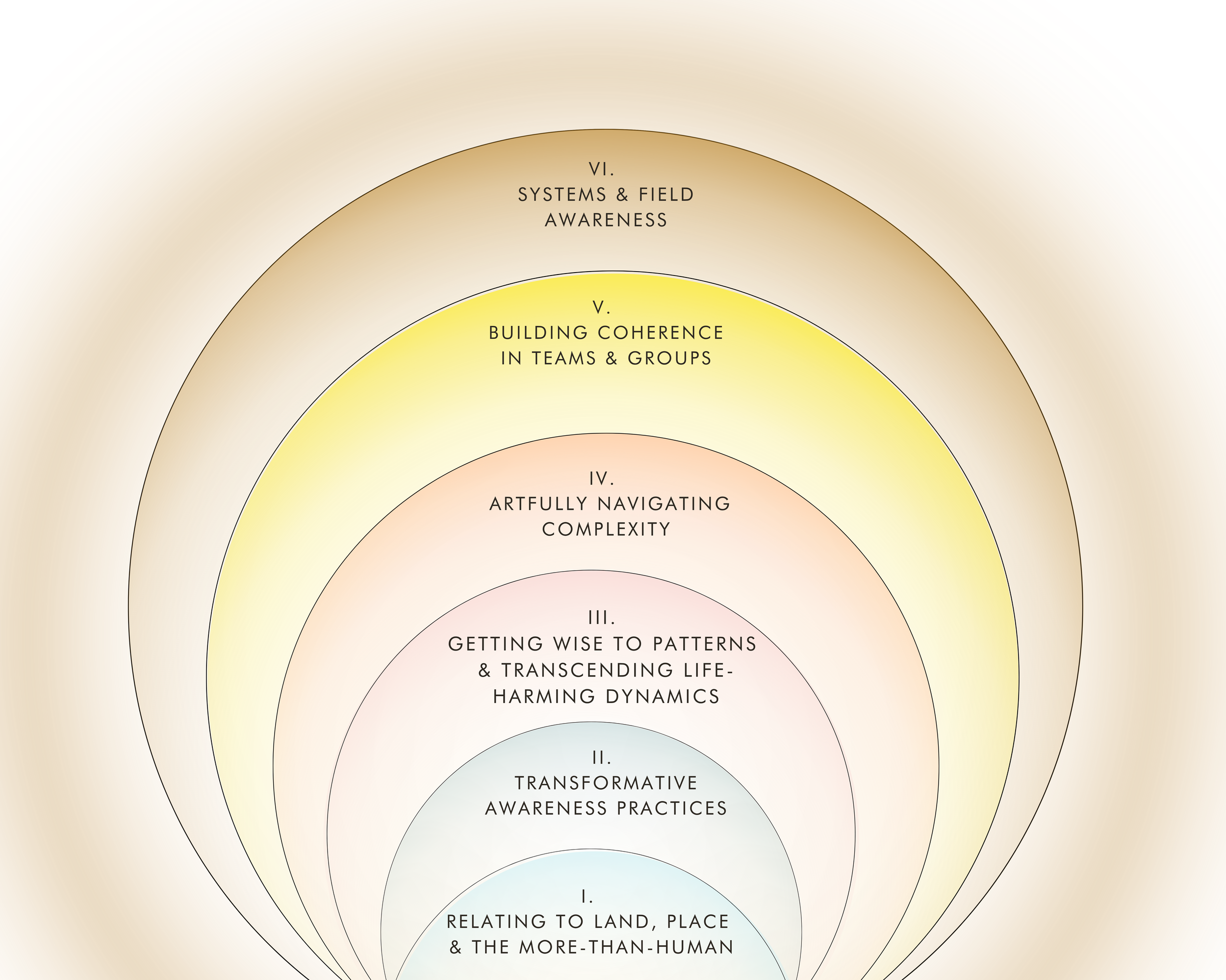
Spheres of Work
The six spheres of societal and deep systems realignment
Collective Transitions engages with six interconnected spheres that help orient and support deeper, more sustainable transformation.
There are three levels within each sphere:
Collective
Interpersonal
Individual
Ecosystems of Practice
Our work grows out of a rich ecosystem of interrelated schools of thought and practice. These traditions and approaches guide and inspire us, weaving together ways of knowing that support deep transformation:
Sacred, subtle, earth-based wisdom traditions.
Awareness-based & reflective practices.
Shared and participatory leadership.
Trauma, shadow and grief work.
Seeing & sensing from multiple perspectives.
“Reading” social fields and collective dynamics.
