
The Rainmaker
Cultivating an important individual and collective inner skill for the times we live in
In this post, we consider how the lessons from an ancient Chinese tale can help us — collectively and individually — to acknowledge, reflect on, support and heal the imbalances, disorders, and disharmonies facing our societies and planet today.
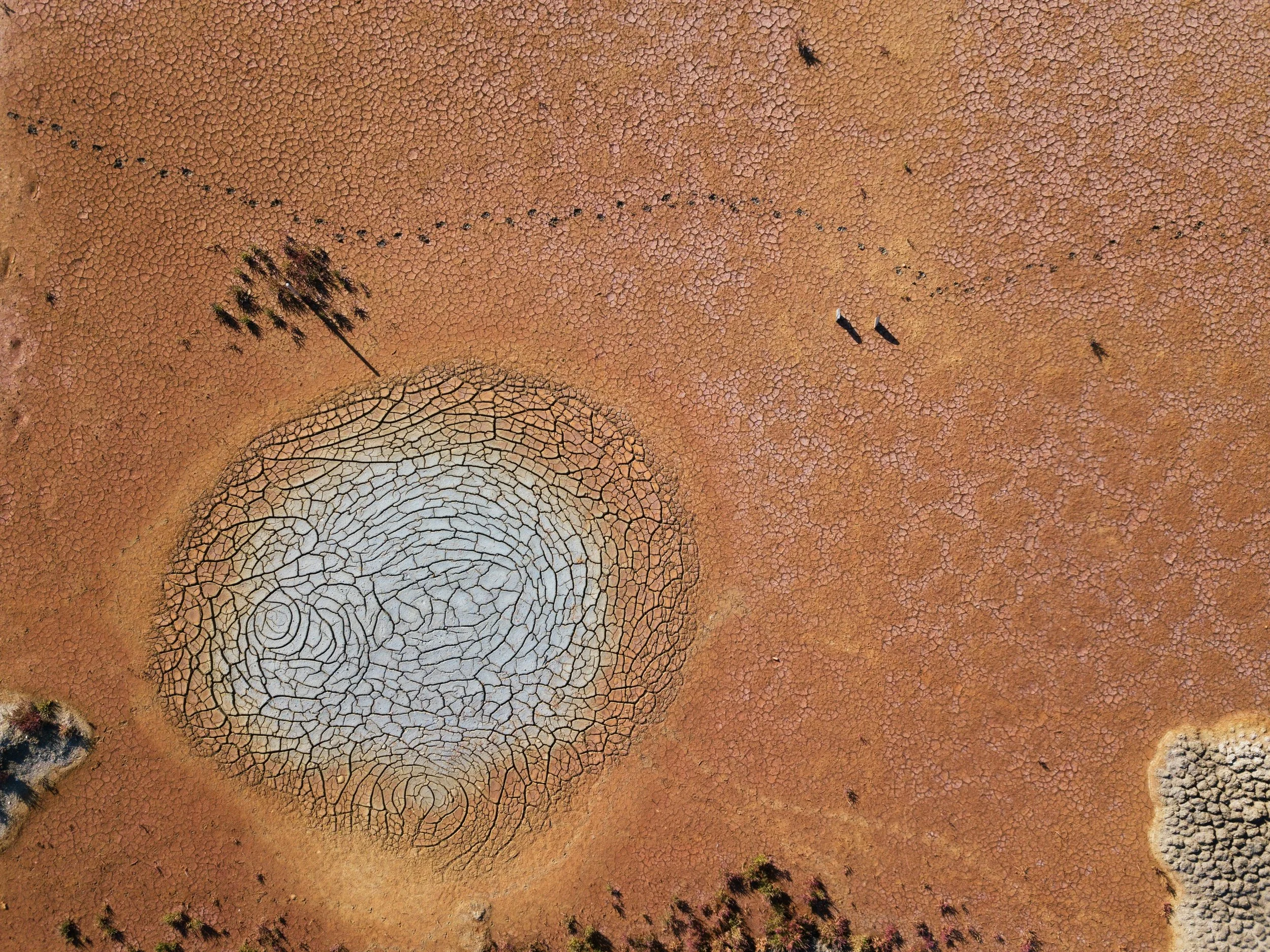
Photo by Olivier Mesnage on Unsplash
Years ago, when I first heard the story of the Rainmaker, I was baffled, relieved, and couldn’t hold back a juchzer (a Swiss vocal sound celebrating or expressing one’s joy).
The story presented me with a metaphor and offered me an ‘explanation’ as to why my personal and inner work and thoughts, as well as how I am present with, and make sense of, issues from the outer world, are held with equal importance in my actions for societal transformation.
For a long time, I had an intrinsic sense that what is happening in the outer world — what I see, experience, witness, and feel called to work on — cannot be separated from my inner realities, patterns, and ways of perceiving. If all things are interrelated, then my inner state, too, must be both influencing and influenced by the outer reality.
Ancient wisdom for our time
The story of the Rainmaker goes as follows:
In the ancient Chinese province of Kiaochou, there was a drought so severe that many people and animals were dying. All the religious leaders attempted to solicit relief from their gods: the Catholics made processions, the Protestants said their prayers, and the Chinese fired guns to frighten away the demons of the drought. Finally, out of desperation, the townspeople called upon the Rainmaker, and from a province far away there appeared a shrivelled old man. The old man immediately requested a small hut on the outskirts of town, where he locked himself up in solitude for three days and nights, and then, on the fourth day, it rained. In fact, it snowed, at a time when snow was not expected.
Wilhelm, who was allowed to interview the Rainmaker, asked him how he had made the rain, and the old man responded by exclaiming that he did not make the rain — that he was not responsible! Not satisfied with this response, Wilhelm pressed on: “Then what did you do for these three days?” And the old man explained that he had come from another province where things were in order with nature, but here, in Kiaochou, things were out of order, and so he himself was also out of order. Thus, it took three days to regain Tao and then, naturally, the rain came.
(Adapted from C.G. Jung, CW 14, pp. 419–420, note 211).
This story, based on a real event, reveals the power of coherence, as well as the influential dynamics and subtle communication between one’s inner state and the outer manifestation of realities. It is a simple story, and yet it has the power to shift our own worldview quite radically.
Our current global struggles
As I observe our current world stage, with its daunting and life-threatening metacrises which demonstrate various forms of disorder and disharmony such as ongoing genocides, escalating conflicts, escalating climate risks and emergencies, as well as the discriminations and inequalities so embedded within our societies — I can’t help but see parallels with the story of the Rainmaker.
For instance, if we look at how we respond both to our immediate issues and challenges and to more insidious societal trends such as: corruption, fear-provoking news headlines, polarisation etc., we see a similar story presenting itself. Governments, institutions, networks, and communities are trying eagerly to ‘make rain’ — to fix, fight, and solve the issues with their tools, methods, and convictions, based on their respective strategies, interests, and worldviews. Typically, these responses are siloed and treated as isolated events. Too often, the focus is only on what we can DO, rather than also on HOW we are present with WHAT is challenging and confronting.
And so, as the deeper, interlinked root causes continue to be neglected, the spiral of perpetuating patterns persists, leading to more disorder and imbalance and to more disasters, pain, and suffering. And more often than not, it is the most vulnerable in society — including the more-than-human — which gets hit the hardest.
Photo by Gertrūda Valasevičiūtė on Unsplash
Embracing collective rainmaking
To me, the story of the Rainmaker names and reminds us of an essential inner skill that we all are called to get (re)acquainted with and to cultivate more consciously, especially in the face of current global disorder. Can we acknowledge how the whirlwinds of our outer realities also somehow reflect our ‘insides’? Are we aware that the degree to which we are able to be present influences our reality, and indeed may even affect the direct and indirect impact of our action or non-action?
After first hearing this ancient tale, I kept sharing it with friends, colleagues, and clients: “Do you know the story of the Rainmaker?” It was much like the Swiss psychoanalyst Carl Jung, who similarly recounted the tale on all possible occasions, over and over again. For me personally, what has been nagging at me ever since is the intriguing question: “How can we, together, become collectives of rainmakers?”
How can we upgrade so that the way we respond is from a place of coherence and acknowledgment of our shared sameness, as opposed to everyone in their own corner?
The need for a collective is rooted in the acknowledgement that the extraordinary complexity of our times — coupled with the imbalances we see on so many levels, from local to global; individual to societal — covers such a range that it cannot be metabolised by one person, one leader, or one chosen genius alone. It is not a question of whether one individual COULD ‘do it’, but rather that these times are inviting us to see — or better, they are teaching us — that we are an interrelated species, and therefore the upgrading in our approaches has to be rooted in shared meaning across all our differences. Perhaps, actually, we are not meant to do things alone, as solitary actors, as the last few centuries and Western systems have tried to convince us.
Healing an individualistic, fractured planet
When I refer to the extraordinary complexity of our times, I’m talking about the layered-ness of issues and challenges that have piled up over decades and even centuries. These metacrises have taken on such proportions that they cannot be contained within national borders or within any one culture, race, or sector. Perhaps it has always been so, but we have been unable to clearly see the simmering and potentially destructive ripple effects of what may once have seemed to be only a small act of injustice or abuse of power (towards any form of life).
The multiple challenges, struggles, oppressions, power dynamics, conflicts, and other forms of unhealthy expression that we’re currently confronted with are sending us a signal. They demonstrate a crisp and clear landscape of how they are all interlinked and are influenced by how we have shown up — and keep showing up — as humanity, in our vast diversity.
In the past year, witnessing the catastrophic California wildfires, fatal flooding across the globe and intensified droughts, ongoing and escalating wars, openly practised violations to people, the planet, and laws, to name a few. I couldn’t stop thinking about the Rainmaker: If there was ever a time to not only reflect on the question, but also to act and step into the practice of the rainmaker, then the time is NOW.
So I reach out to you and invite you to practice with me and create an informal web of ‘rainmakers’. We will not be untouched by the mess. On the contrary, let us meet, feel, and witness the messiness — the trouble, the fear, the pain — that is reflected in us, as most of us live in places that have been ‘disordered’ for quite a while.
Achieving inner balance, together
Can we bear the intensity of meeting with reality? Can we regain an inner balance, an inner centeredness that is focused not simply on how to ‘solve’ the multiple issues at stake, but also on finding a new inner equilibrium to ‘meet and be with’ what is? Can we cultivate an inner state of coherence — individually and collectively — from which to move into supportive actions in our outer worlds? Not as lonely wolves, but as circles of rainmakers?
How would it shift our perception of reality if we could enter into this relationship, knowing that we’re not ‘doing this’ alone? How would our days look if, instead of hiding in our caves pretending that the current situations don’t touch our lives, we came together to meet and greet the world’s troubles? What would happen if, together, we moved beyond our sadness and desperation, beyond the paralysing fear and anger, beyond the overwhelm and hatred that cloud our thoughts and judgments?
Don’t get me wrong, I’m not suggesting that we stop being active in the ‘outside world’ — but, rather, that we add to our outer engagements a conscious intention and an ongoing cultivation of our inner state of presence and equilibrium. What if we all cultivated this inner place of balance and integrated it into our daily lives, while responding to what we are called to do — be it tending the land, caring for people, working in cafes, or drafting a law. Could this, in some way, shift the course of events? Could this conscious intention — this collective rainmaking –contribute to life-affirming ripple effects which invoke a domino effect of coherence and order? Join us in our exploration to find out more.
Our Field Holding practice is one answer, one invitation to be practitioners, learners, humbly exploring, daringly trying, and dedicatedly showing up for these times.
Further reading:
We Are All Rainmakers by Betsy Perluss
The Rainmaker and the Dream of Drought by Stephen Farah
Author
Written by Luea Ritter, with the support of Caroline Cunliffe, Lisa Mastny and Nancy Zamierowski.