
At the UNFCCC’s annual Conference Of the Parties (COP) – the supreme decision-making body for the United Nations’ climate negotiations – tensions, pressures and competing geopolitical agendas often shape the atmosphere.
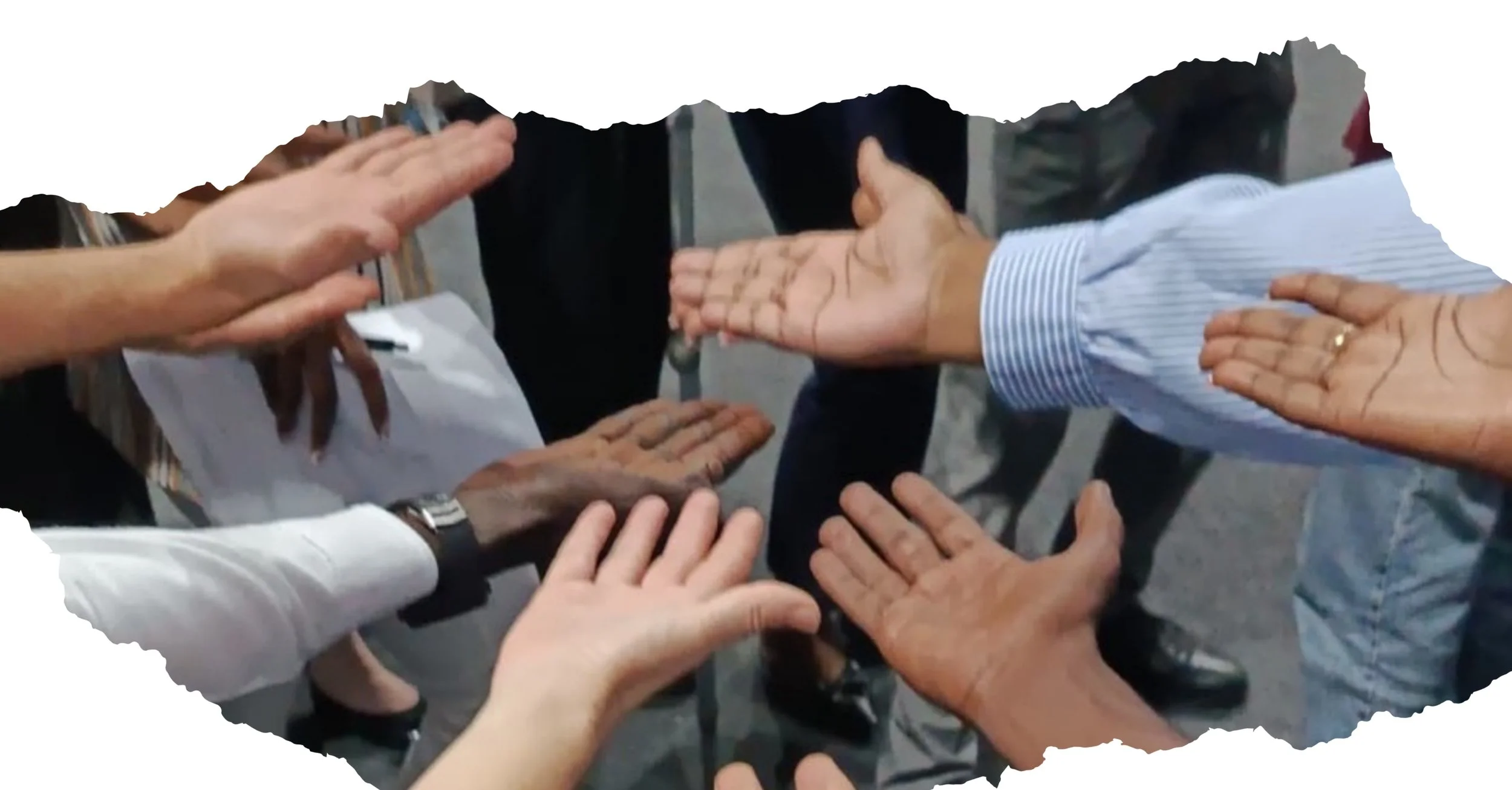
Closing clap at COP30
The environment can be tense, fast-paced, at times fractious. Too often, delegates leave the two-week discussions feeling exhausted, close to burn out and disillusioned; feeling that the idea of meaningful progress remains distant.
For the past four years, I have attended COP with the Youth Negotiators Academy – a non-profit organisation which trains and empowers young leaders to participate effectively in international environmental negotiations, focusing on bridging the generational gap in climate justice and diplomacy by providing skills, training, and a vibrant network and community for young people to bring their perspectives and influence decision-making, with a focus on the agency of the next generations to come, working across cultures and regions towards systemic relevant decision.
Doing things differently
My role with the YNA, which I share with many others, is to help cultivate a culture of care and solidarity amongst this next generation of leaders. With representatives from more than 80 countries, the YNA holds an immense diversity of perspectives, experiences, and geopolitical realities. Creating conditions for connection and mutual learning helps participants navigate the many pressures and divisions, juxtapositions and perpetuating divides that are embedded and can arise in pressurised, international negotiation spaces.
We do this by bringing more into the space than negotiation alone. We make room for who people are beyond their roles: what moves them, what worries them, what keeps them awake at night. And then we ask together: how do these experiences inform who we are in this space and how we show up in it? What culture do we want to give shape to, which resembles what we see and aspire to for our shared future?
In carefully facilitated spaces and training where these stories can be shared and participants empowered to do so, something shifts. A sense of having so much more in common than that which divides begins to emerge. Participants begin to recognise how much they hold in common beneath the surface of national positions and political mandates. Genuine connections begin to form through moments of recognition and the mirror pools of shared humanity.
Within the maelstroms of power, division and turbulence which often circle at COP, these relationships create solid ground on which to meet - enabling us to work across difference and diverse realities as (un)likely allies. Instead of encountering the other as primarily representatives of countries, people begin to see one another as individuals brought into sharper focus, individuals who each care and are here on behalf of their people. The soil becomes more fertile for collaboration and even amidst the rushing currents of negotiation, it becomes possible to pause, breathe and sense-make together.
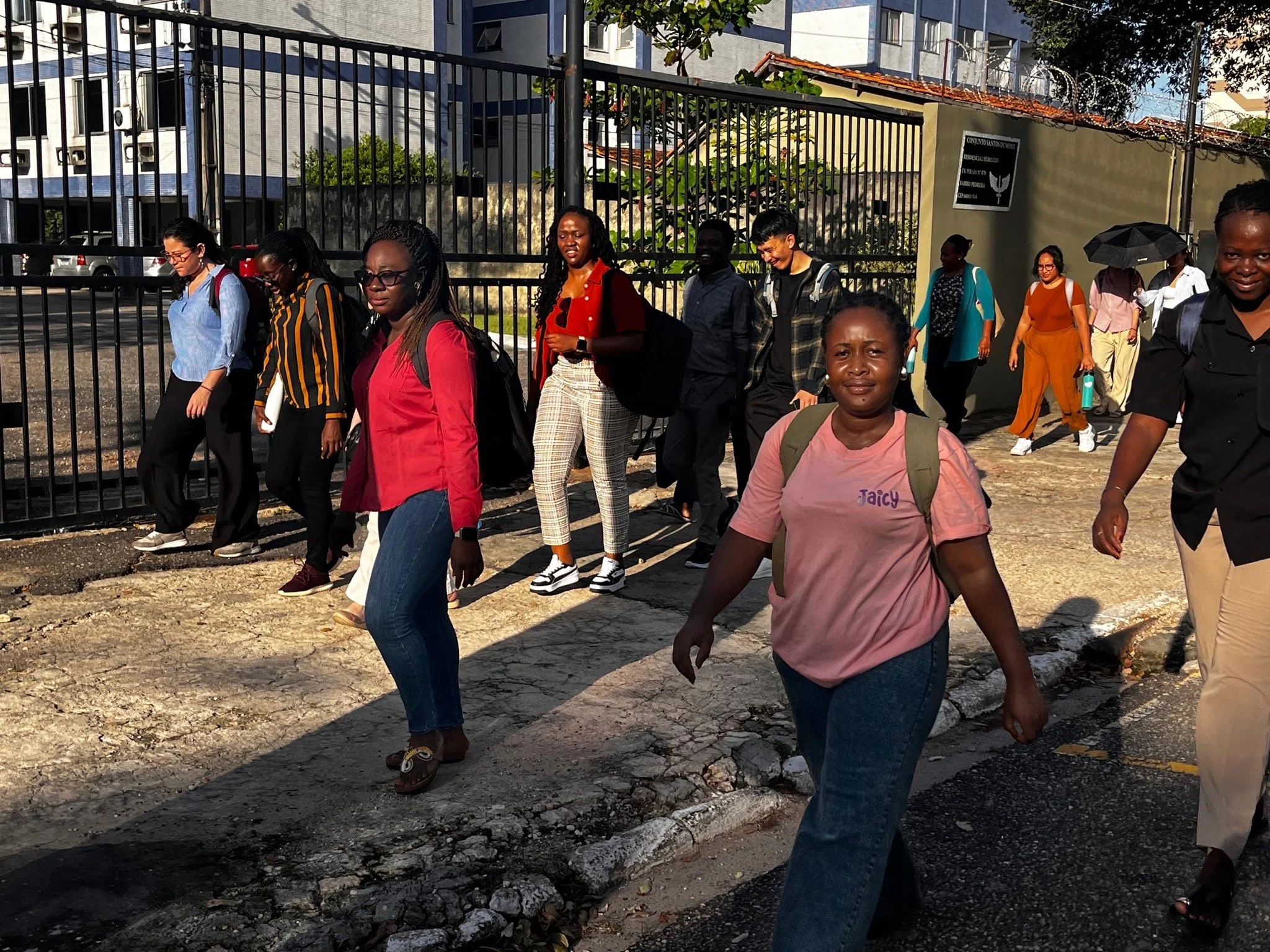
Walking through the streets of Belem to the training venue
A culture of care and solidarity
Very practical forms of care support this culture of connection.
Within the YNA space, participants know they can come to “the hotspot” when the pressure becomes too much - to talk, make sense, rest, or simply take a moment away from the intensity and be with the wider community and care team who are there to meet mental, relational and emotional needs. We make sure nourishing food is available. We bring small sensory comforts: oils, tea, quiet corners. Sometimes it is simply a hug, a word of encouragement, or a moment of shared stillness. These gestures may seem small, yet within the overwhelming environment, they matter. They signal that you matter, and we are all in this together..
Over time, something remarkable begins to happen. Amid the dense jungle all around, a small clearing appears — a still point; an island of coherence. People who pass by often pause and say, “Huh. It feels different here somehow.” From the outside it looks ordinary: a couple of tables, chairs, and people sat in conversations. Yet people gravitate towards it because of the atmosphere being created.
Care, we see, becomes felt, is tangible and recognised.
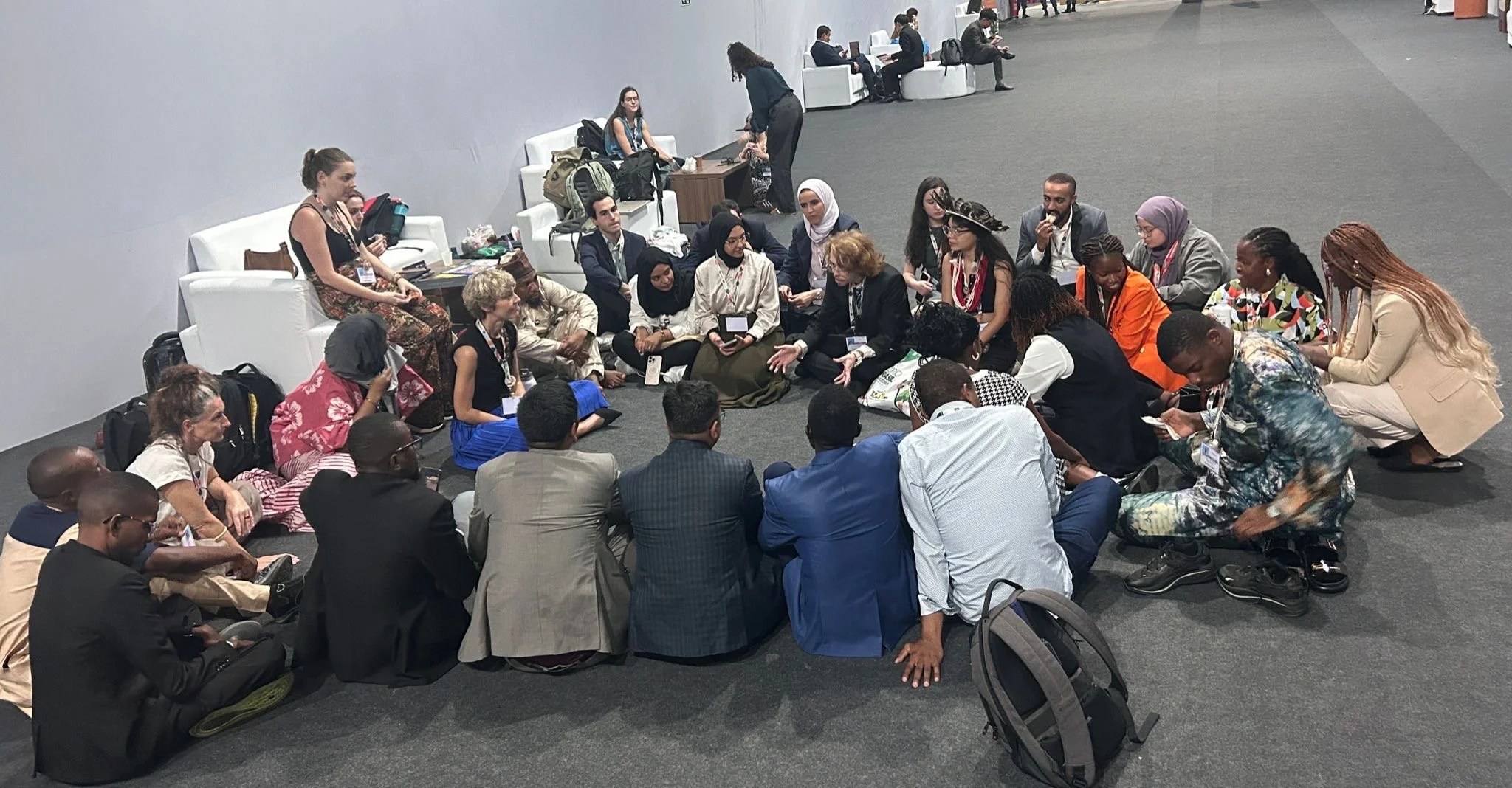
Daily reflection circle
Care creates agency
This culture of care and solidarity represented in the group also begins to influence the negotiations themselves. The YNA participants know they are not alone. Even when stressed or exhausted, they are held within a network of friendship and mutual support. They know they have a voice and that it matters, even if it's not the voice in the room with the most influence. They know showing up and communicating makes a difference, and this allows them to speak more freely, to ask questions they might otherwise have held back. They know that just being present matters equally.
Care and a sense of belonging creates agency, which means feeling able to ask the question might just make someone else who has been negotiating in these spaces for many years think: “Wow. I’ve never looked at it in that way before.” Sometimes a simple question asked from curiosity can open entirely new perspectives in a discussion.
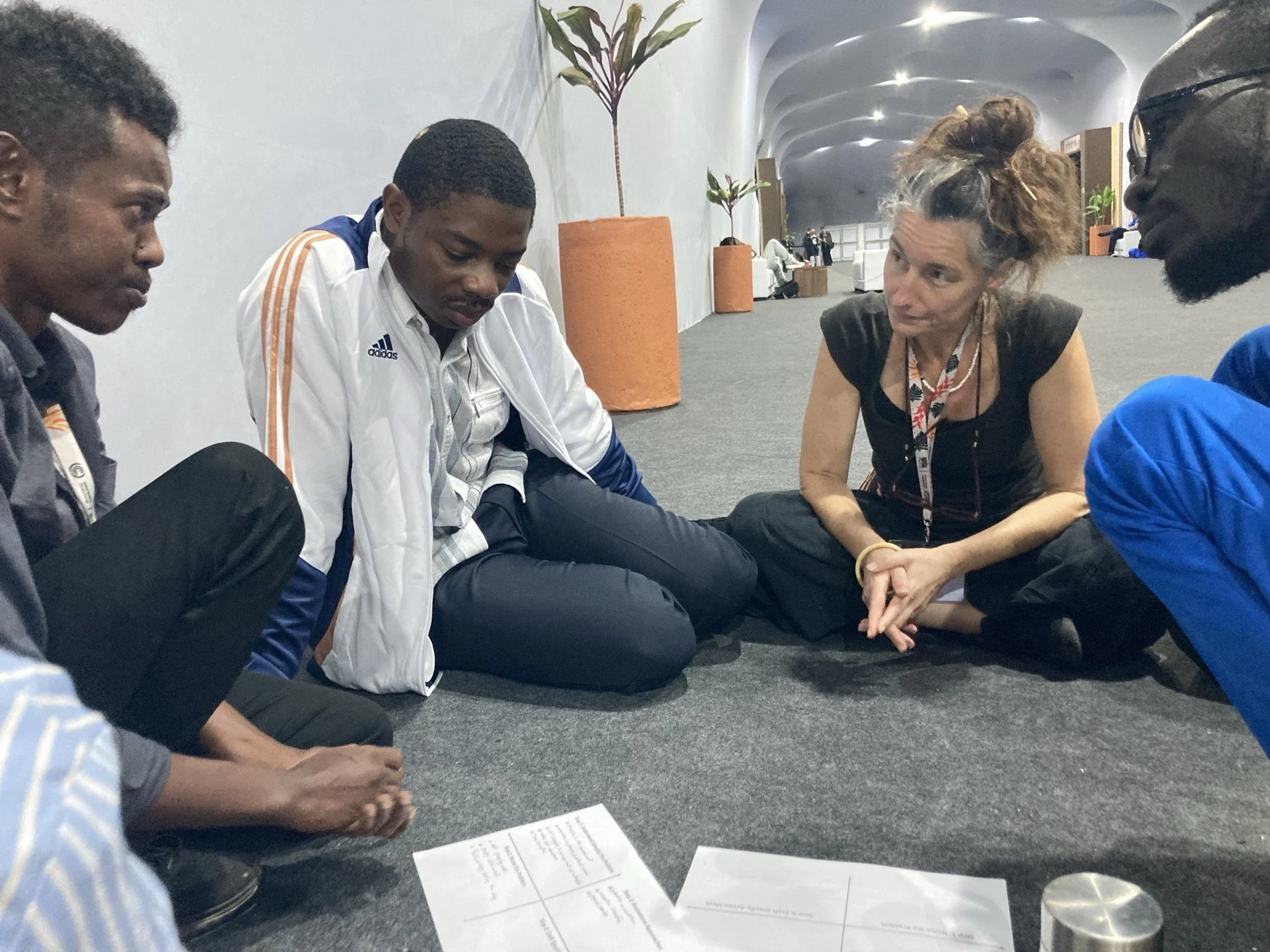
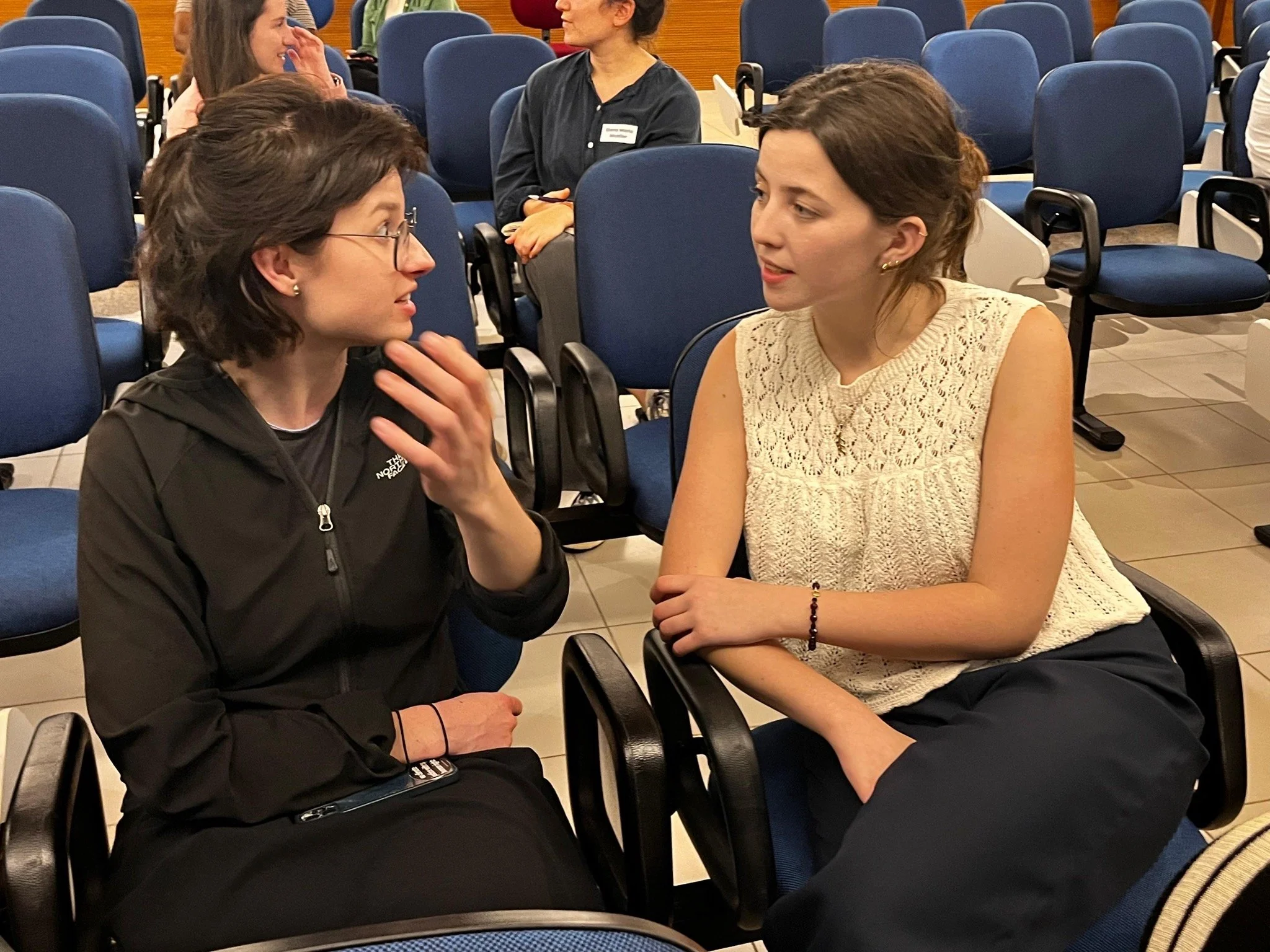
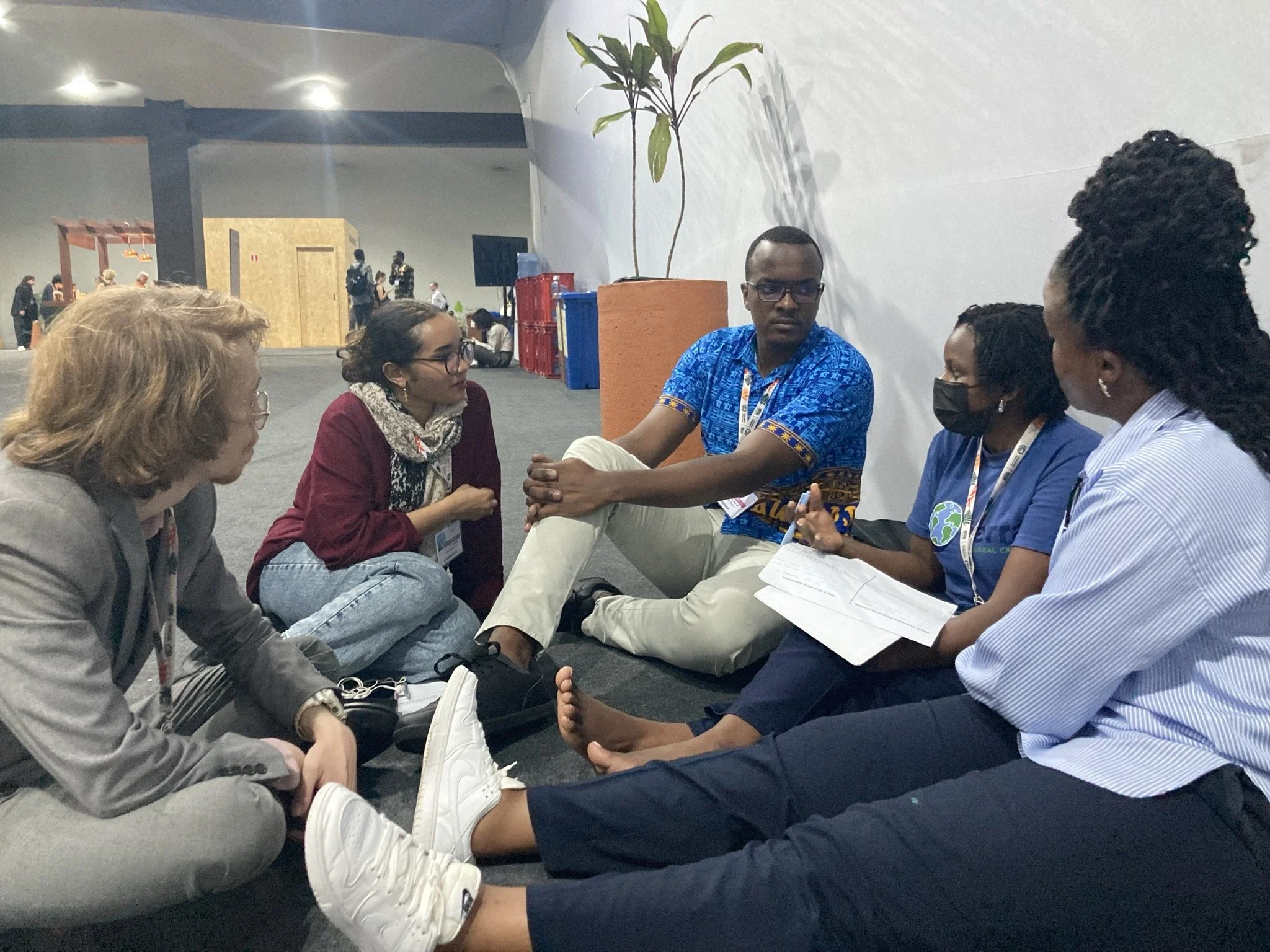
Co-working on texts and track-related issues
The old ways do not need to be repeated
Spaces like these quietly challenge some of the deeper, ingrained structural dynamics that shape international negotiations: hierarchies of power, generational divides, and the lingering shadows of colonial patterns within global governance.
Friendships formed across cultures and countries begin to create small bridges and enable pathways that allow people to meet differently, even when representing different geopolitical positions.
These bridges show that negotiations can be approached in a different way. Even within a system that – despite the very valid and good intentions of the UN – still carries a lot of top-down fragmentation and division, care and deep listening can open new possibilities. The old patterns do not need to repeat themselves: once we have created a shared awareness, and cultivated our collective capacity to meet one another, we strengthen HOW we do WHAT we do.
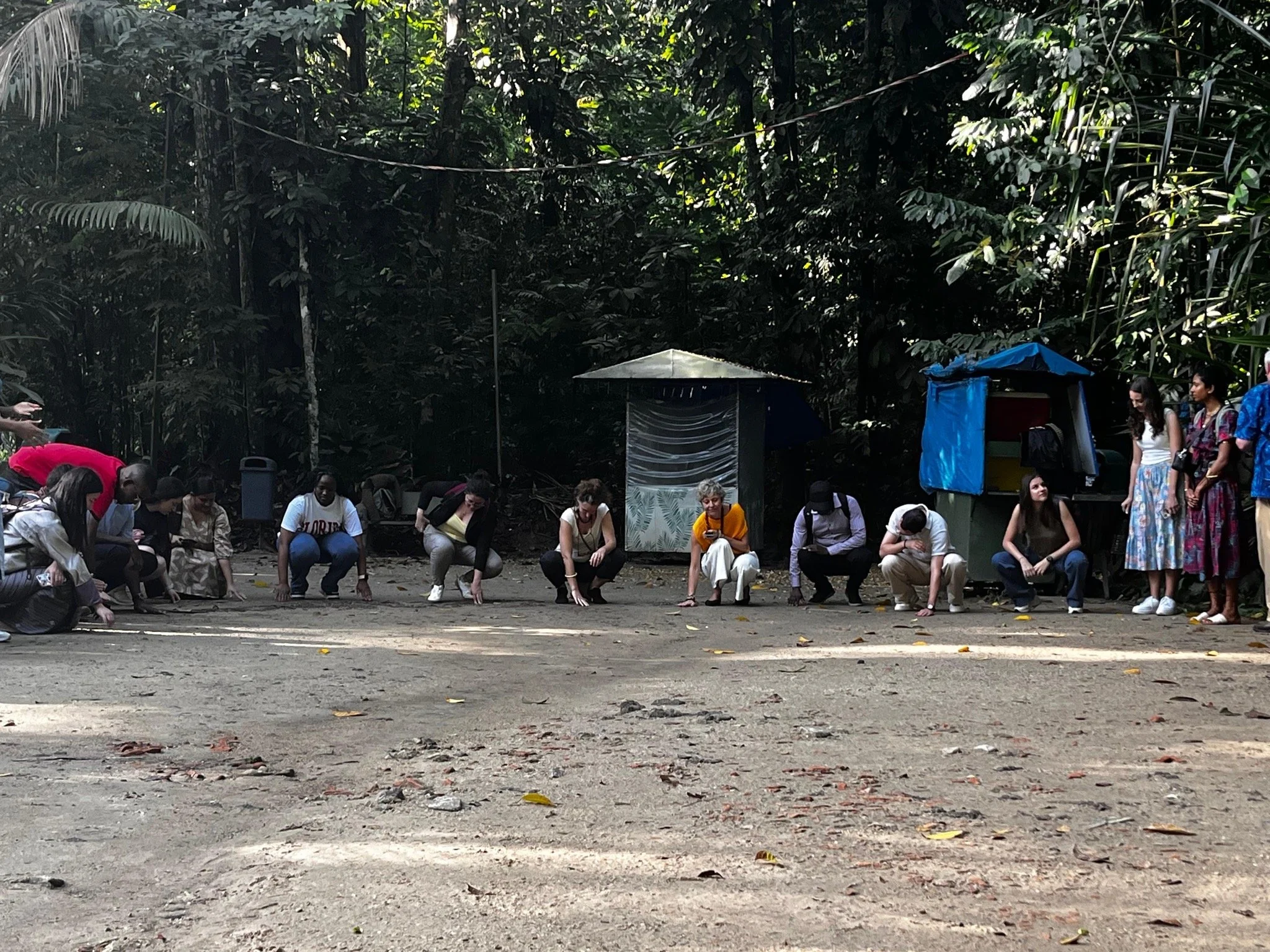
Connecting with the more-than-human
Ripples beyond the room
When a culture of care and solidarity is established within a smaller group, its effects often ripple outward into the larger system. The solidarity and friendship in the smaller space transfers into the bigger whole - rippling its way through discussions until it starts to make a difference in the fabric of the negotiations themselves. Discussions broaden beyond the simple binaries of power — who has it and who does not — towards a more nuanced understanding rooted in shared responsibility and the ability to ‘see’ the issues at stake from diverse angles.
This might sound idealistic but actually, it’s already happening. Over the years I’ve been attending COP I’ve witnessed it happening in real and tangible ways, even if small, the sprouts are already emerging.
Those who gel together knowing a different way is possible, who are willing to build strong relationships across differences, are often the ones able to remain steady within the intensity of negotiations. Those who recognise when someone needs space to speak, when coherence needs to be built, or when a third option might need to emerge beyond entrenched positions, are able and daring to stay in the discomfort and trouble of the discussions themselves.
And so even though I may feel critical of the COP space, its process and the structural reverberations of inequality echoing within its structures, I also see something else whilst I’m there: many hearts standing up and standing together, finding each other in the midst of chaos and overwhelm who are willing to say: We will stay. We will name what is difficult and we will keep going together even though the process is slow, because it matters, we matter, and we will keep going because this work matters.
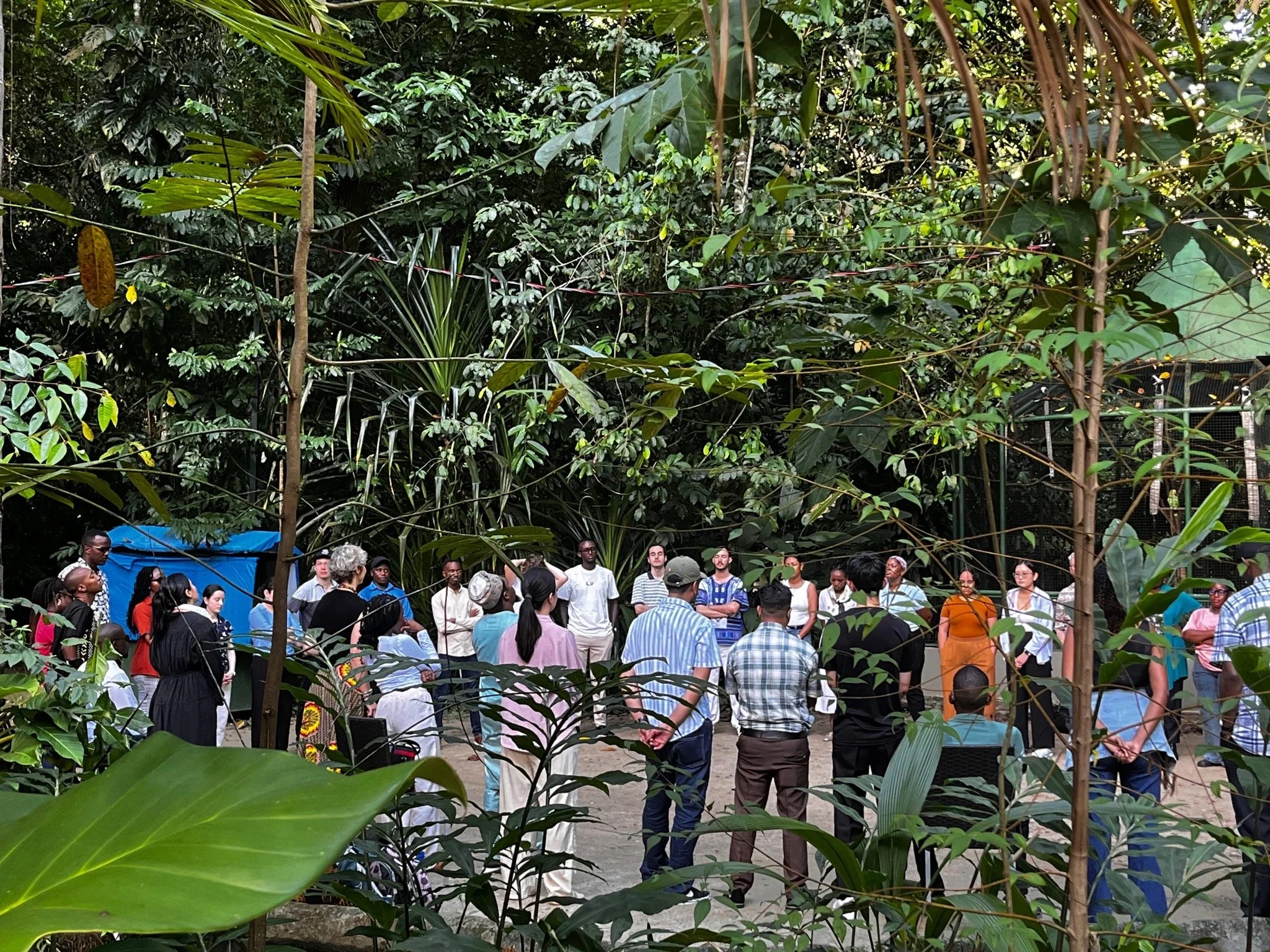
Arriving together for the first time in-person
Concrete outcomes of creating a culture of care and solidarity:
When a culture of care and solidarity is intentionally cultivated and maintained over time, several shifts become visible:
People experience less burnout during intense negotiations.
Listening capacity increases, especially during high-tension moments when emotions rise.
Greater resilience and creative problem-solving leads people to find a middle ground more effectively.
Participants feel supported rather than isolated in discussions.
Increased care towards each other leads to a greater sense of belonging, which in turn leads to greater agency in discussions.
Friendships formed across cultures create a deeper sense of shared purpose, even when political positions differ.
How this culture is nurtured:
Care does not arise accidentally, it is cultivated through intentional practices and diligently nurtured. This includes:
Creating moments of stillness throughout the day, including reflection circles where different voices, experiences and perspectives can be heard and allowed to stand equally together.
Sharing field readings and collective reflections.
Reaching out and checking how people are doing from a supportive rather than controlling intention. Asking simple, supportive questions: How’s it going? How can I/we best support you today?
Offering small gestures of care such as tea, conversation, quiet presence, when someone is overwhelmed or unwell, but also when they’re not. A genuine attention to each other goes a long way.
These simple acts help create an atmosphere where people feel seen, empowered and supported to show up with all they are. And within that atmosphere, new insights and possibilities can begin to emerge.
And finally, here’s a little bit of feedback from a YNA delegate and COP16 participant:
“I'm currently in session… but we're having a little break… If you were with me at COP16, you'd know I was raving about these sessions nonstop - how they're literally life changing for me. They've been a game-changer for my mental health, my wellbeing, and my daily practice… I've definitely shed some tears in the process but in the best way, there's just something about being in a space with people who get you, you know?.. it helps you grow in every way. And I think that's something we should all cherish.”